Geometries
Choose a named body, construct a meridian or elliptical-section loft, or supply a closed triangular surface. Geometry support and material support are separate: a mesh that works for a rigid scatterer does not automatically support elasticity. All lengths below are in meters. The generated bodies use x for their longitudinal or revolution axis, with y and z transverse.
Geometry gallery
Each gallery panel shows one geometry rendered from its package mesh. Click an image to enlarge it. Panels are independently scaled and preserve aspect ratios. The mesh resolution is for viewing, not a scattering convergence recommendation.
Julia example
using AcousticScattering
using CairoMakie: Figure, Axis3, plot!, save, hidedecorations!, hidespines!

function save_geometries(entries; meridian=false)
    for (name, body) in entries
        fig = Figure(; size=(570, 360))
        ring = body isa Torus || (body isa RevolvedBody && body.closed)
        ax = Axis3(fig[1, 1];
            aspect=:data, azimuth=ring ? pi/6 : -0.35pi, elevation=0.12pi,
            viewmode=:fitzoom, perspectiveness=0.15)
        surface = meridian ? mesh(body; resolution=128) :
                  mesh(body; method=:full, resolution=0.16, mesh_order=2, qorder=2)
        plot!(ax, surface)
        hidedecorations!(ax)
        hidespines!(ax)
        slug = replace(lowercase(name), r"[^a-z0-9]+" => "_")
        save("geometry_$(slug).png", fig)
    end
    return nothing
end

canonical = [
    "Sphere" => Sphere(0.7),
    "Prolate spheroid" => Spheroid(1.0, 0.4),
    "Oblate spheroid" => Spheroid(0.35, 0.85),
    "Flat-ended cylinder" => Cylinder(0.4, 1.5),
    "Capsule" => Cylinder(0.4, 1.0; endcap_depth=0.4),
    "Bent, domed cylinder" => Cylinder(0.25, 2.0;
        radius_curvature=1.2, endcap_depth=0.25),
]
save_geometries(canonical)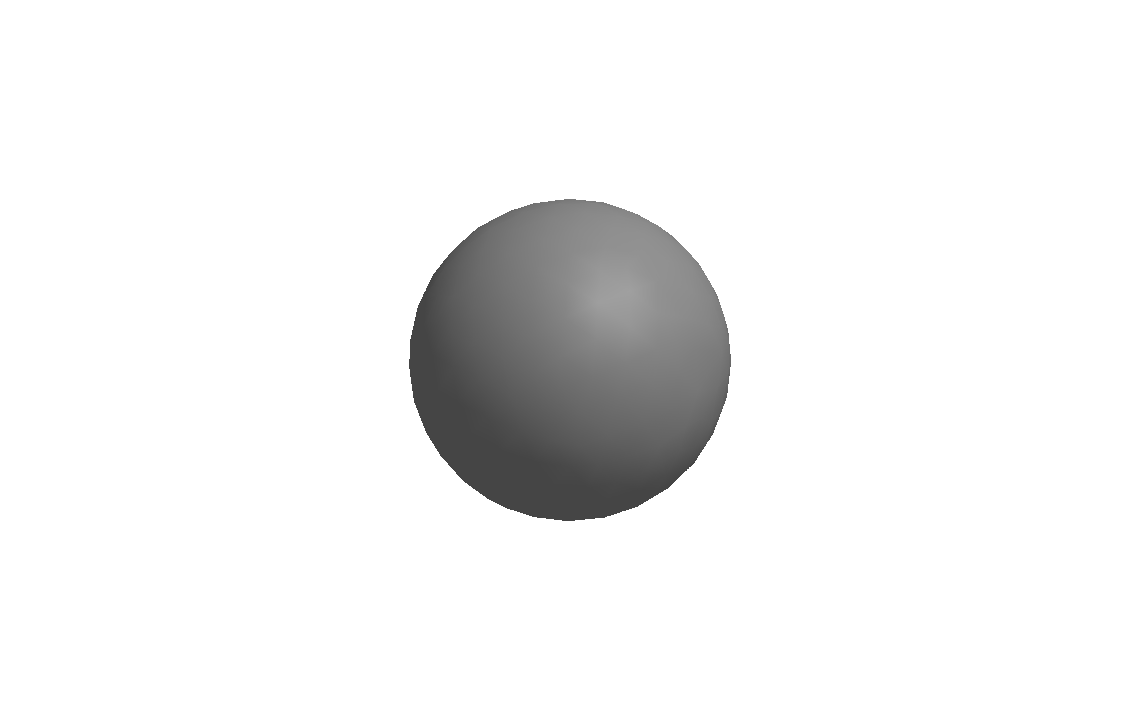
Sphere
Sphere(radius)
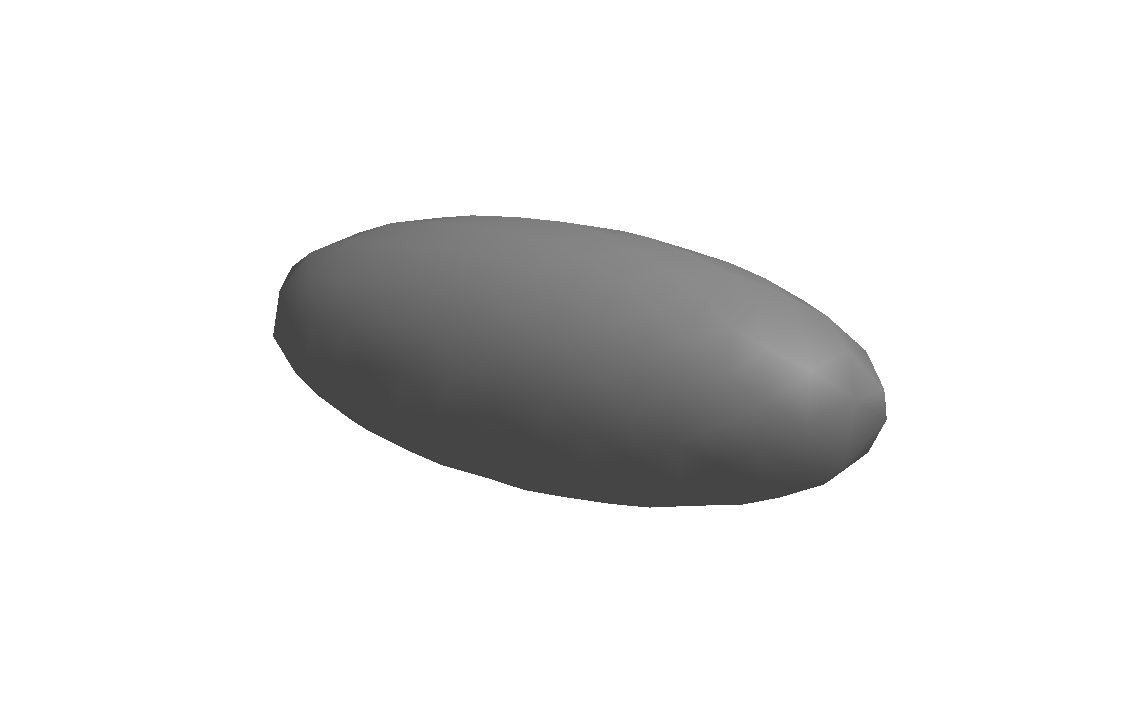
Prolate spheroid
Spheroid(a, b), with a > b.
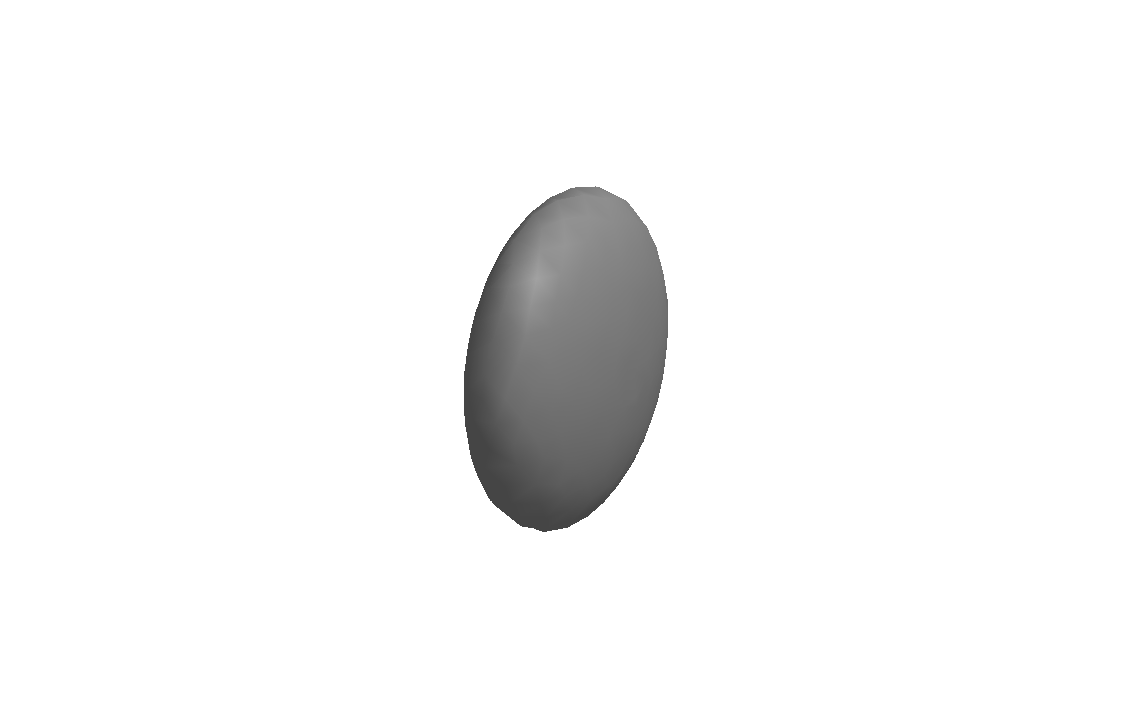
Oblate spheroid
Spheroid(a, b), with a < b.
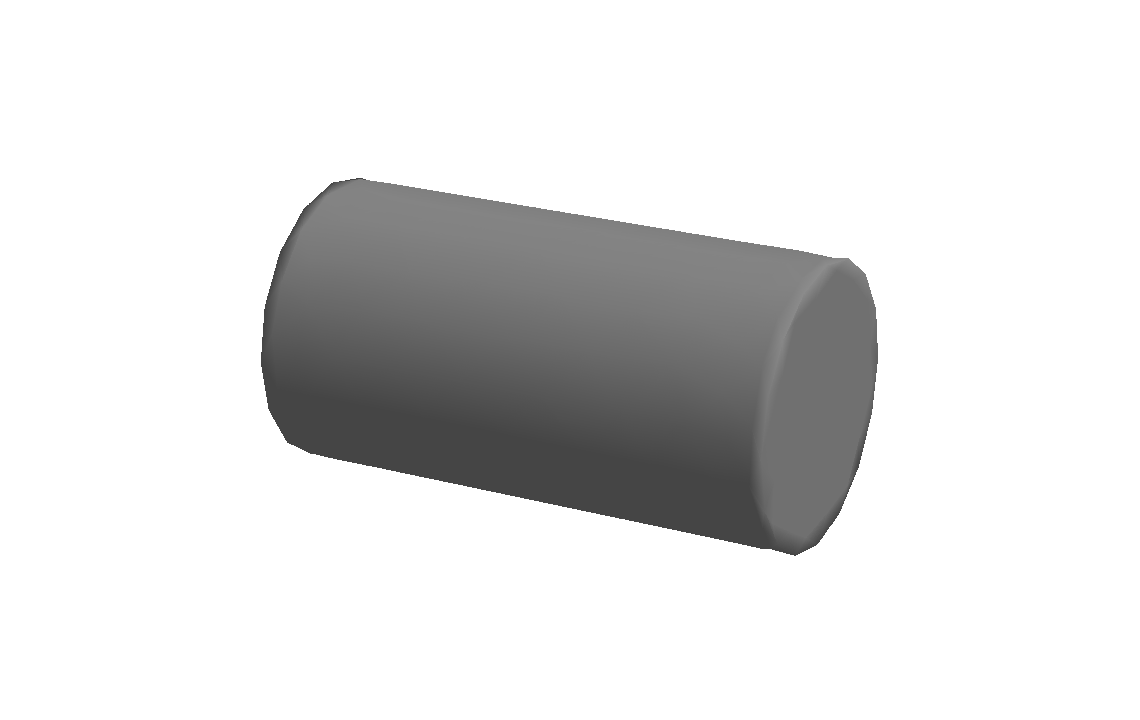
Flat-ended cylinder
Cylinder(r, L)
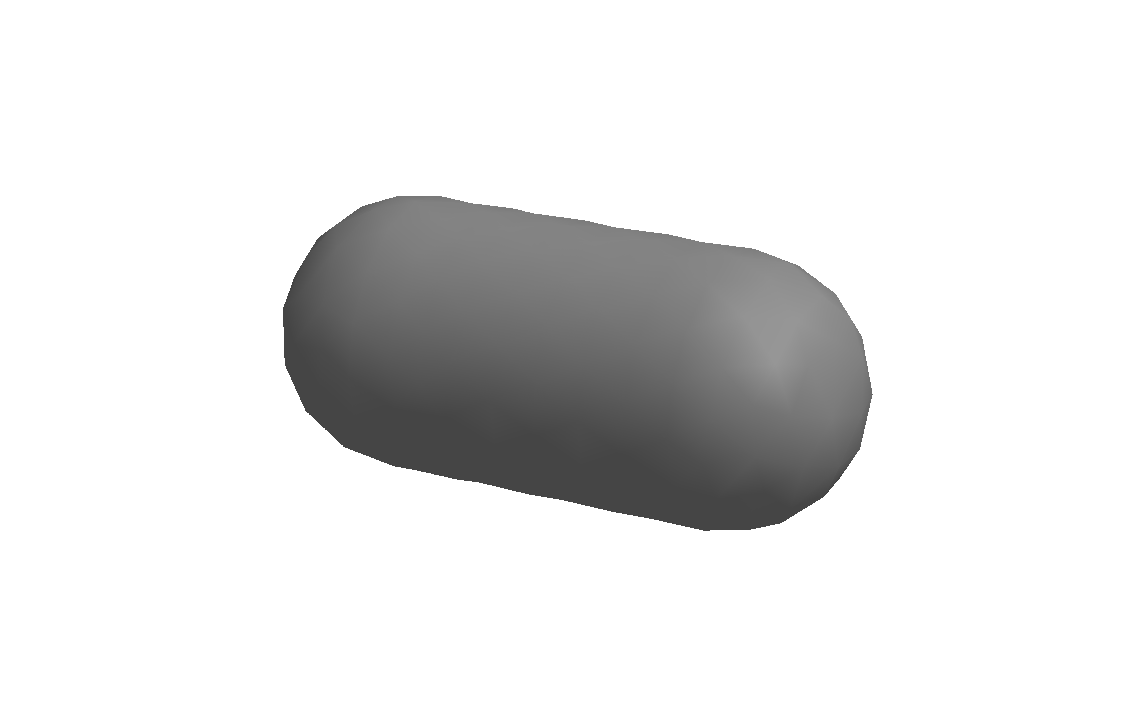
Capsule
Cylinder(r, L; endcap_depth=r)
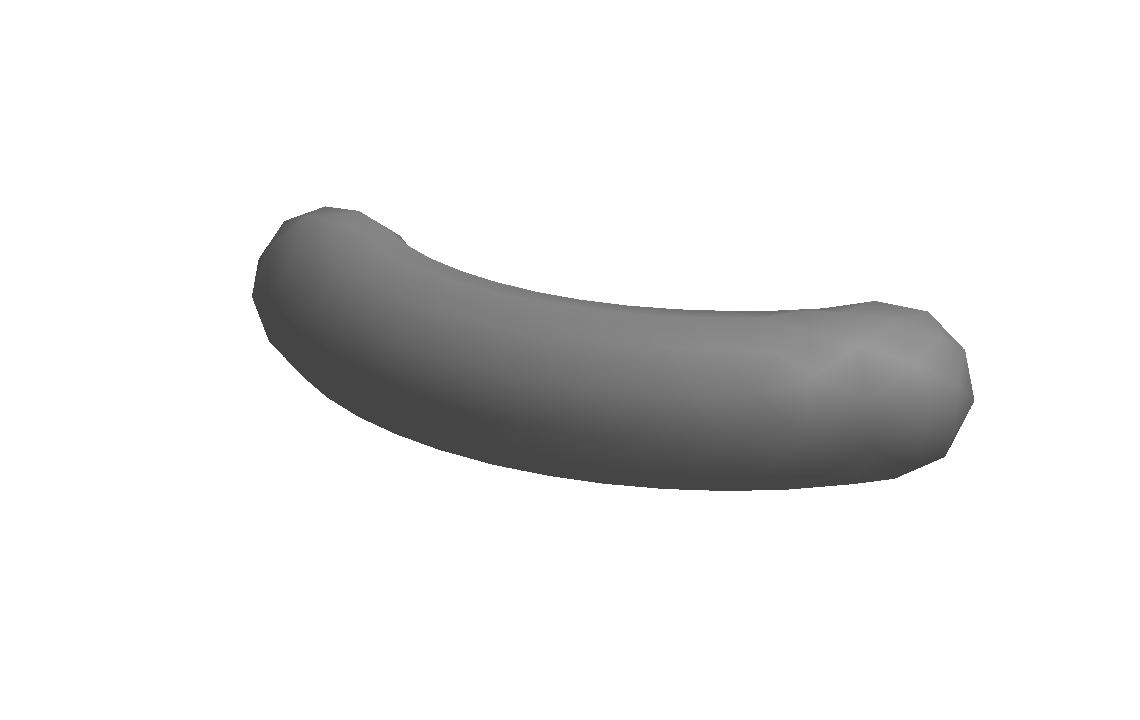
Bent, domed cylinder
Cylinder(r, L; radius_curvature=R, endcap_depth=d)
Julia example
primitives = [
    "Triaxial ellipsoid" => Ellipsoid(1.0, 0.6, 0.35),
    "Superellipsoid" => Superellipsoid(0.9, 0.6, 0.4;
        axial_exponent=0.6, equatorial_exponent=0.6),
    "Cone" => Cone(0.6, 1.5),
    "Bicone" => Bicone(0.6, 1.8; waist=0.4),
    "Circular frustum" => Frustum(0.65, 0.3, 1.4),
    "Elliptical frustum" => Frustum((0.65, 0.35), (0.3, 0.2), 1.4),
]
save_geometries(primitives)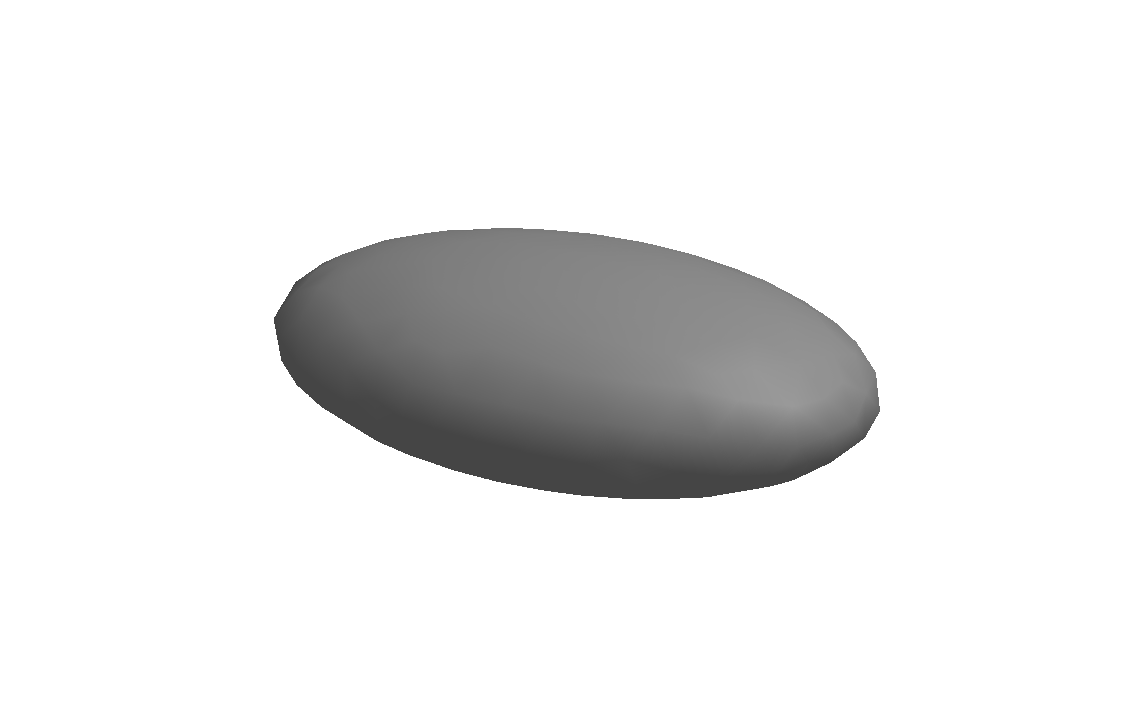
Triaxial ellipsoid
Ellipsoid(a, b, c)
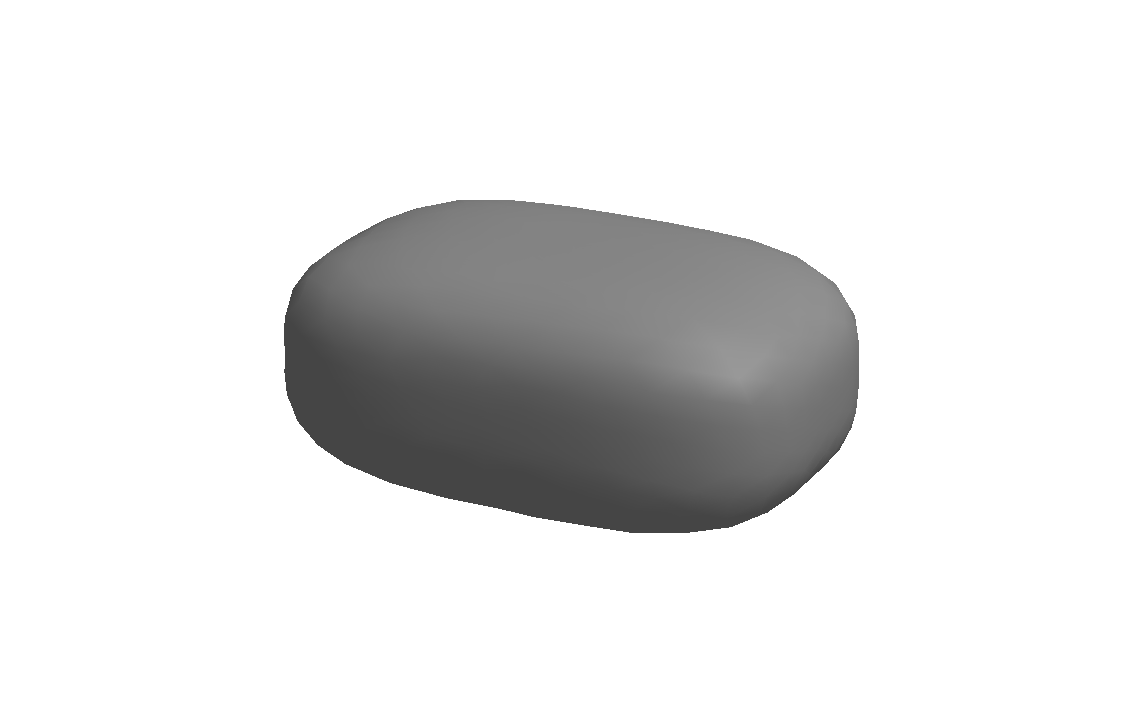
Superellipsoid
Superellipsoid(a, b, c; axial_exponent=e1, equatorial_exponent=e2)
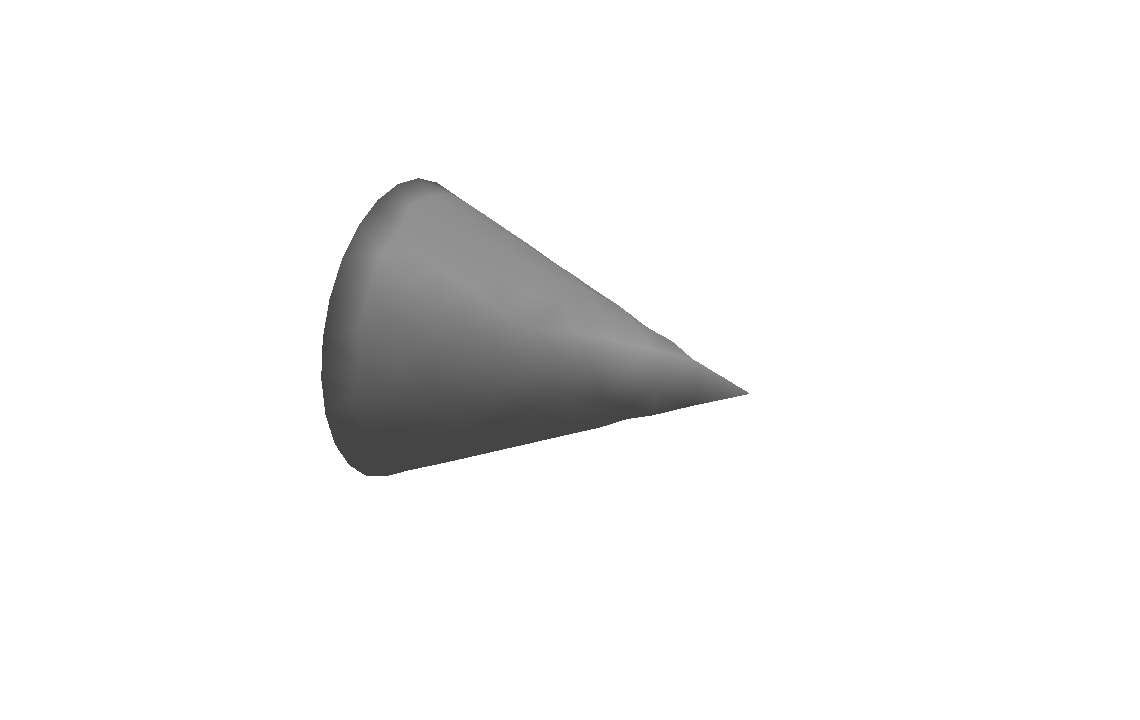
Cone
Cone(radius, length)
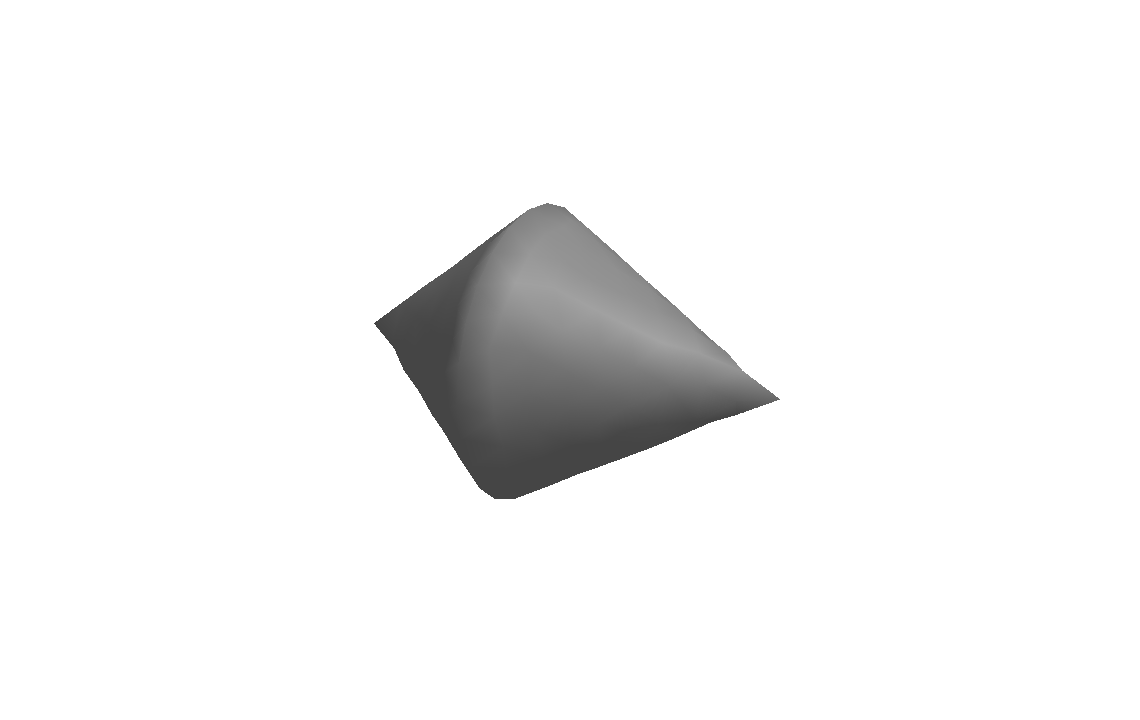
Bicone
Bicone(radius, length; waist=0.4)
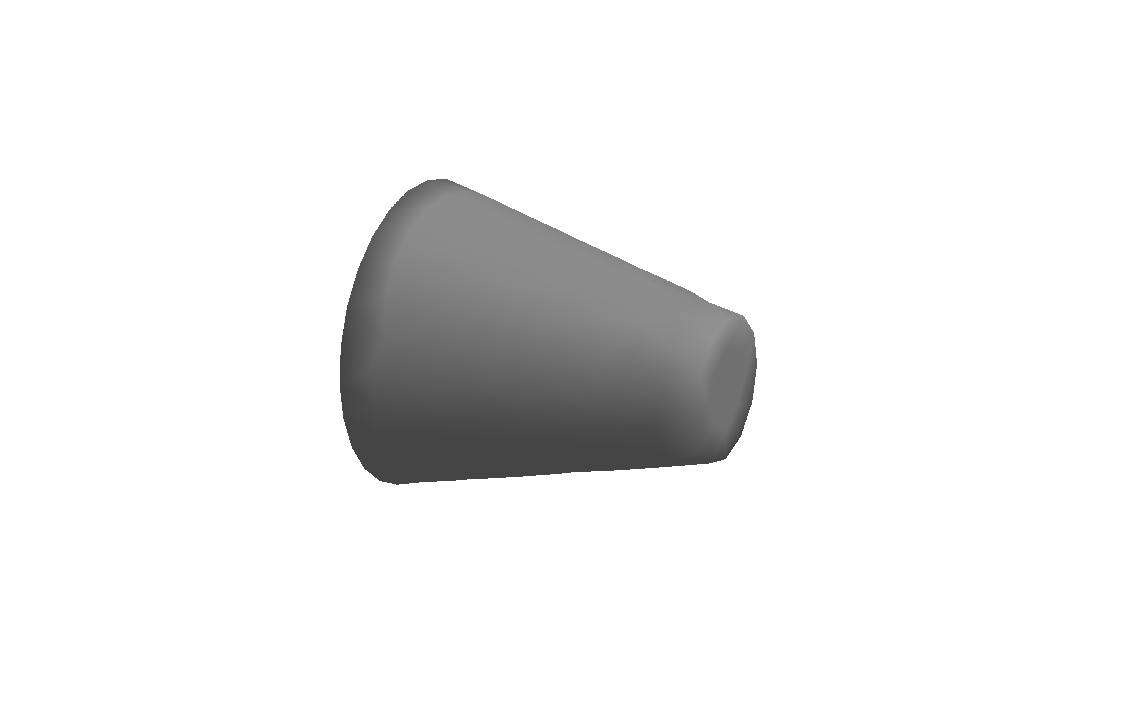
Circular frustum
Frustum(r1, r2, length)
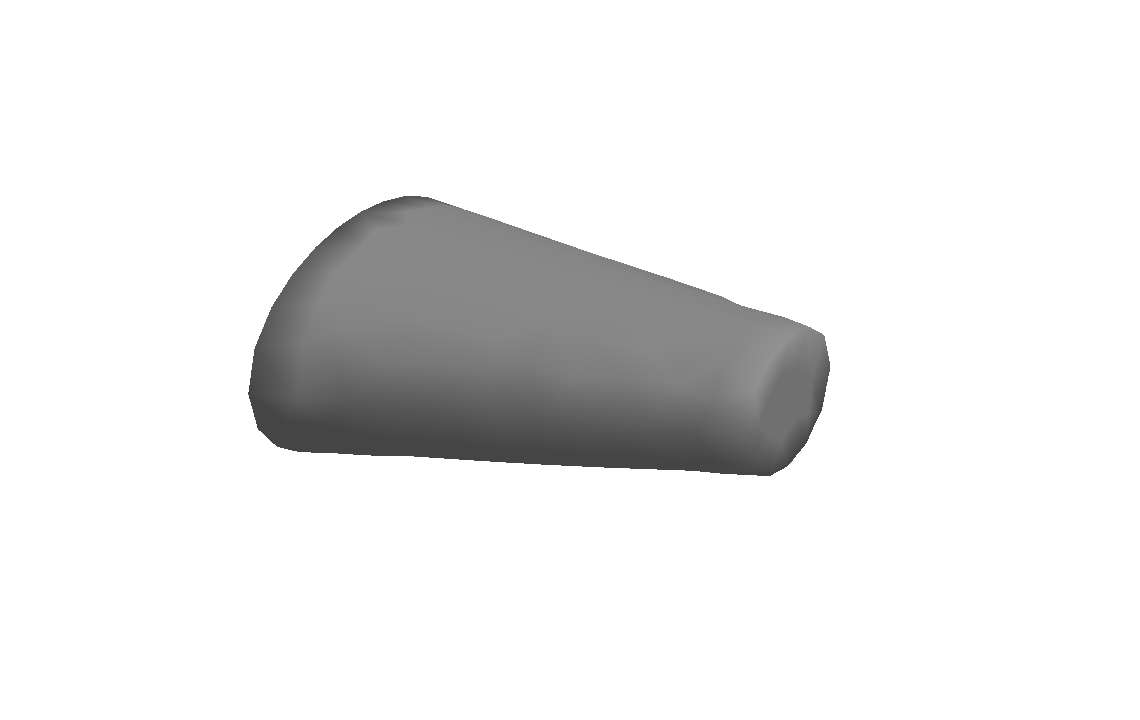
Elliptical frustum
Frustum((a1,b1), (a2,b2), length)
Profiles, lofts and toroids
RevolvedBody accepts axial coordinates and radii describing a simple piecewise-linear meridian. Its ordinary form has two endpoints on the axis and positive interior radii. closed=true instead describes a loop away from the axis, allowing toroids with noncircular cross-sections. Crossing or touching profiles are rejected. Either traversal direction is accepted.
LoftedBody joins elliptical sections along a straight or bent centerline and closes both ends with flat caps. Supply centers as a $3\times N$ matrix and semi-axes as a $2\times N$ matrix. Section normals follow the centerline unless directions is supplied. twists rotates each section about its normal in radians. All semi-axes must be positive.
Julia example
centers = [-1.0 0.0 1.0; 0.0 0.15 0.6; 0.0 0.0 0.15]
axes = [0.3 0.5 0.25; 0.2 0.3 0.15]
profiles = [
    "Circular frustum chain" => FrustumChain(
        [-1.0, -0.5, 0.2, 1.0], [0.0, 0.5, 0.35, 0.0]),
    "Elliptical frustum chain" => FrustumChain([-1.0, 0.0, 1.0], axes),
    "Bent elliptical loft" => LoftedBody(centers, axes; twists=[0.0, 0.2, 0.4]),
    "Ring torus" => Torus(0.75, 0.25),
    "Elliptical tube torus" => Torus(0.75, (0.15, 0.3)),
    "Rectangular-section toroid" => RevolvedBody(
        [-0.2, 0.2, 0.2, -0.2], [0.55, 0.55, 0.95, 0.95]; closed=true),
]
save_geometries(profiles)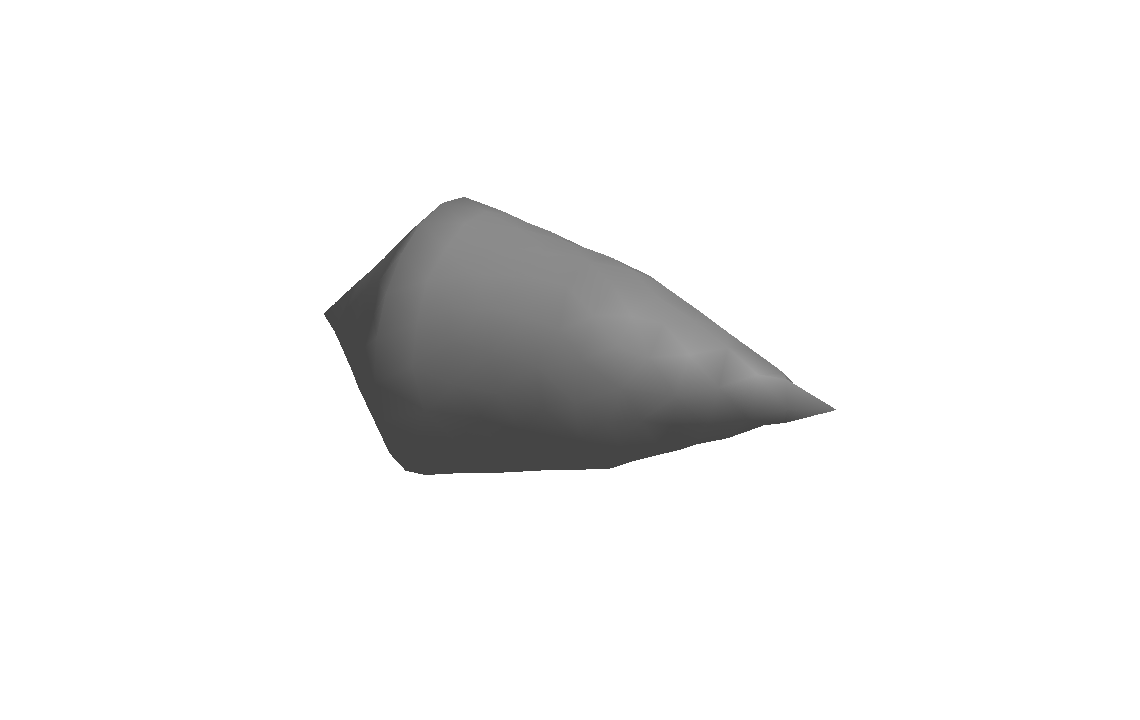
Circular frustum chain
FrustumChain(x, radii)
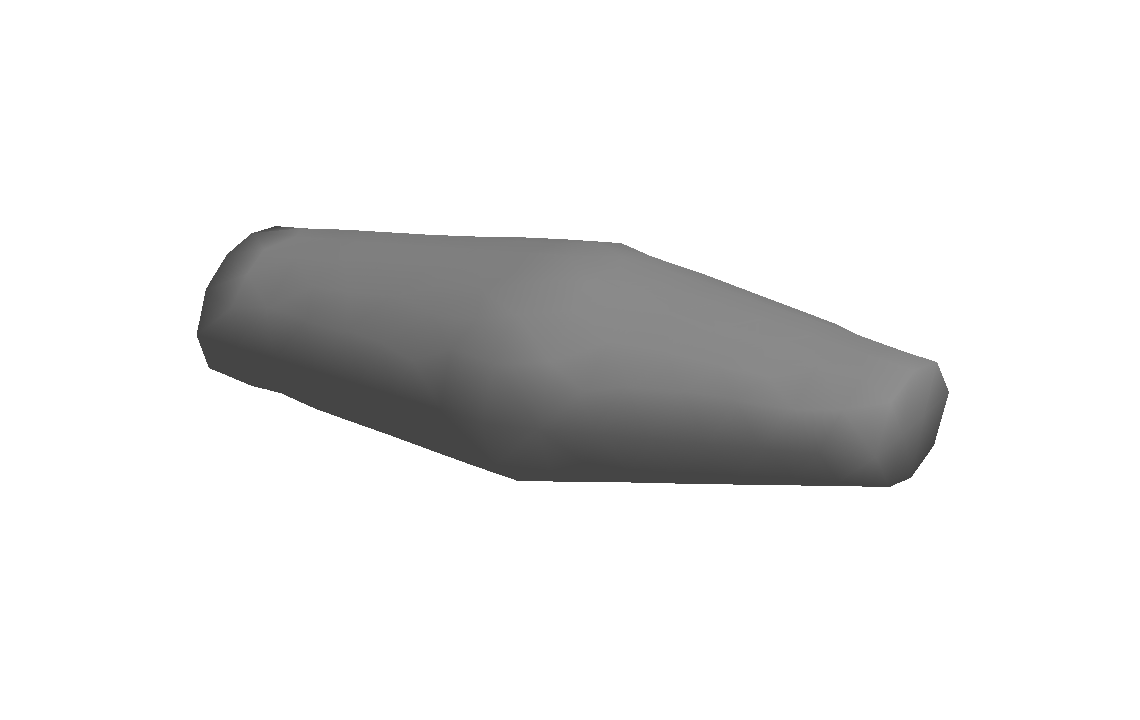
Elliptical frustum chain
FrustumChain(x, semiaxes)
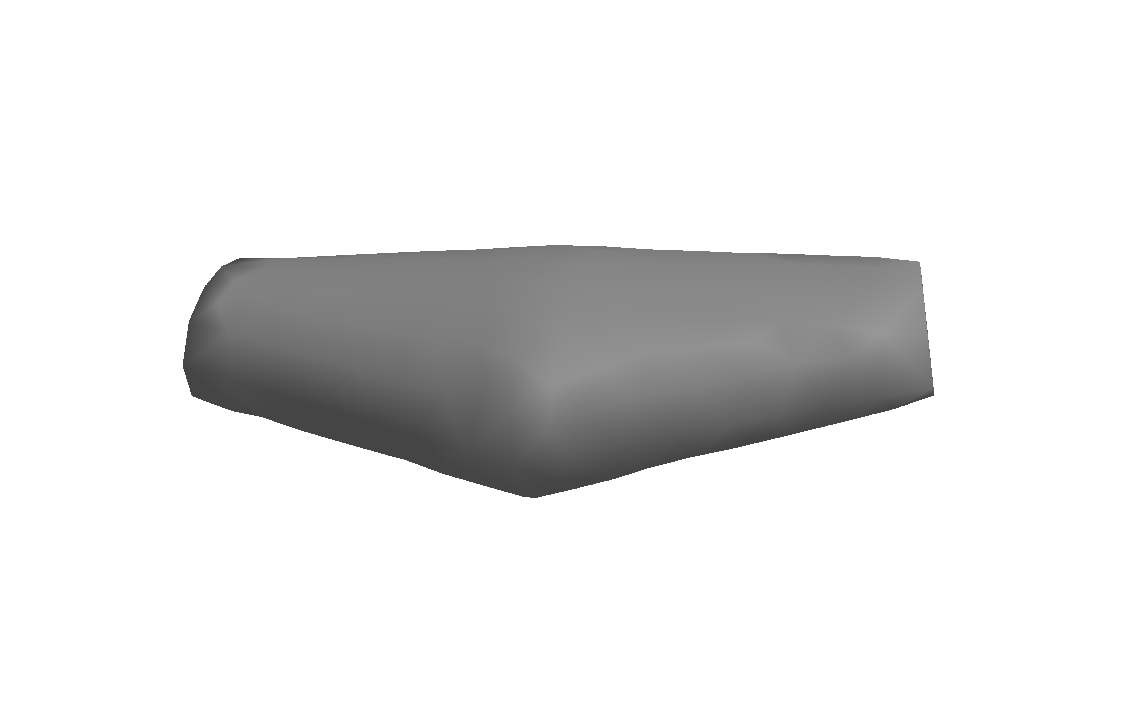
Bent elliptical loft
LoftedBody(centers, semiaxes; twists)
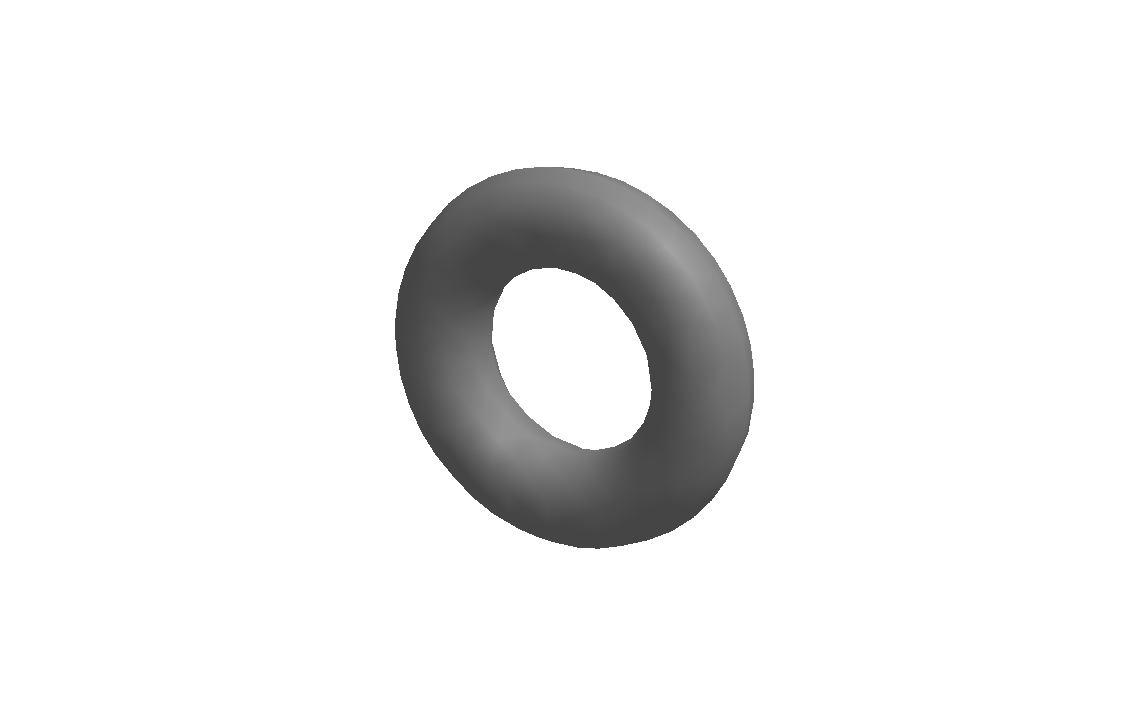
Ring torus
Torus(R, r)
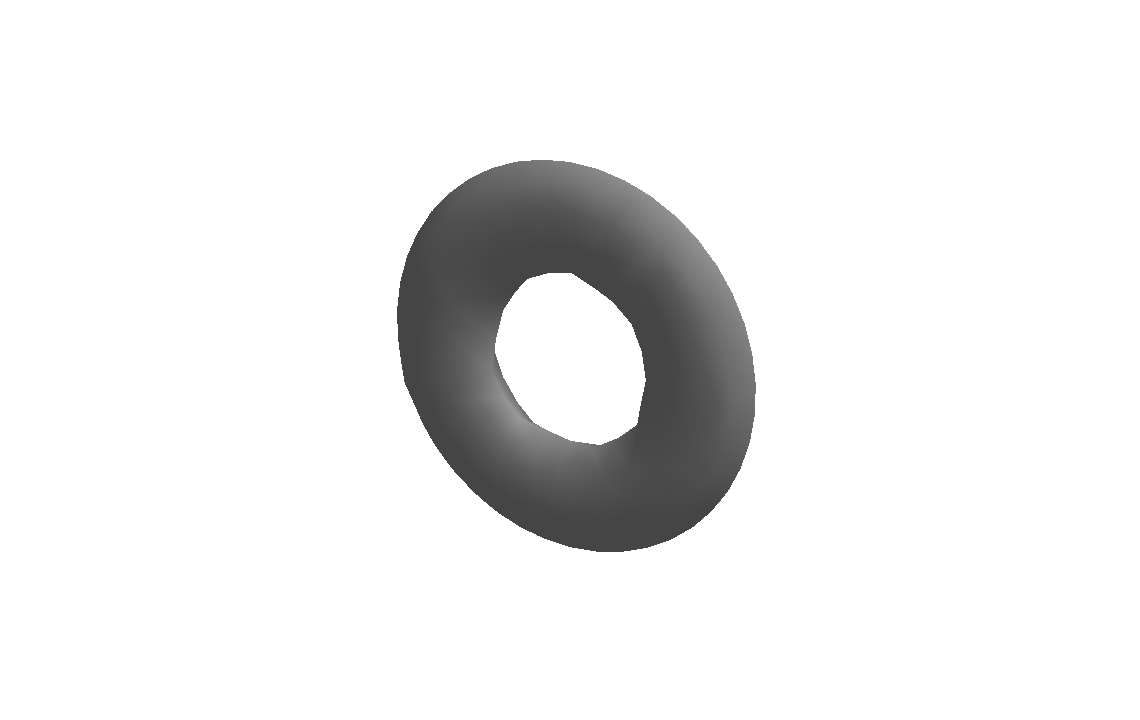
Elliptical tube torus
Torus(R, (axial, radial))
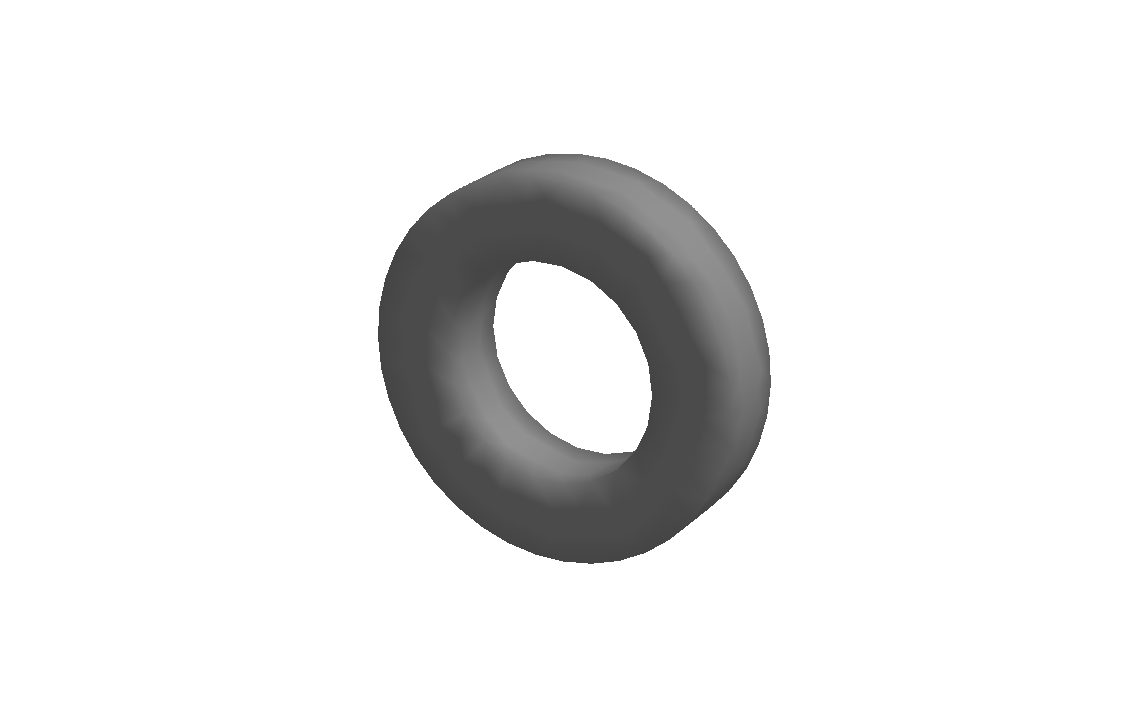
Rectangular-section toroid
RevolvedBody(x, radii; closed=true)
Finite capped paraboloids, hyperboloids, ogives, waisted bodies, rounded noses and other surfaces of revolution can use sampled profiles without another solver. For example, the next paraboloid has $r^2=0.3(x+1)$ and a flat cap at $x=1$. The hyperboloid has $r=0.3\sqrt{1+(x/0.6)^2}$ between two flat caps.
Julia example
parameter = collect(range(0.0, 1.0; length=33))
paraboloid = RevolvedBody(vcat(-1 .+ 2parameter.^2, 1.0),
    vcat(sqrt(0.6) .* parameter, 0.0))
x = collect(range(-1.0, 1.0; length=41))
hyperboloid = RevolvedBody(vcat(-1.0, x, 1.0),
    vcat(0.0, 0.3sqrt.(1 .+ (x ./ 0.6).^2), 0.0))
ogive = RevolvedBody(t -> (2t-1, sqrt(1.25^2-(2t-1)^2)-0.75); n=48)
save_geometries([
    "Capped paraboloid" => paraboloid,
    "Capped hyperboloid" => hyperboloid,
    "Double circular-arc ogive" => ogive,
]; meridian=true)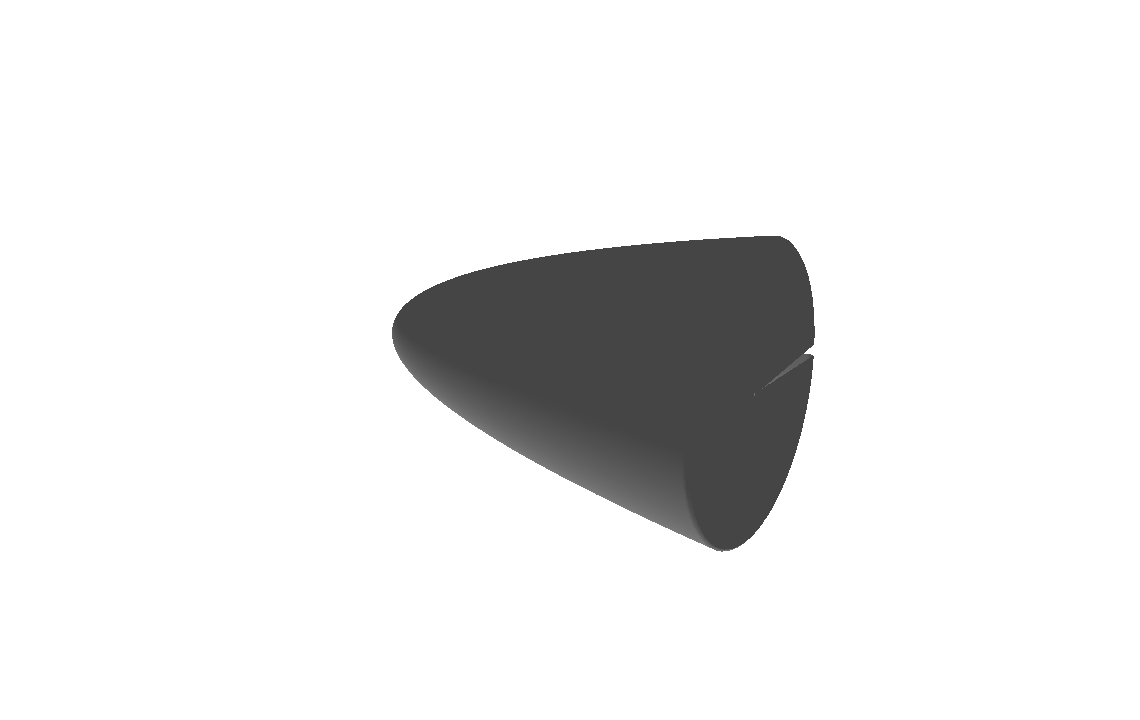
Capped paraboloid
Sampled meridian with RevolvedBody(x, radii).
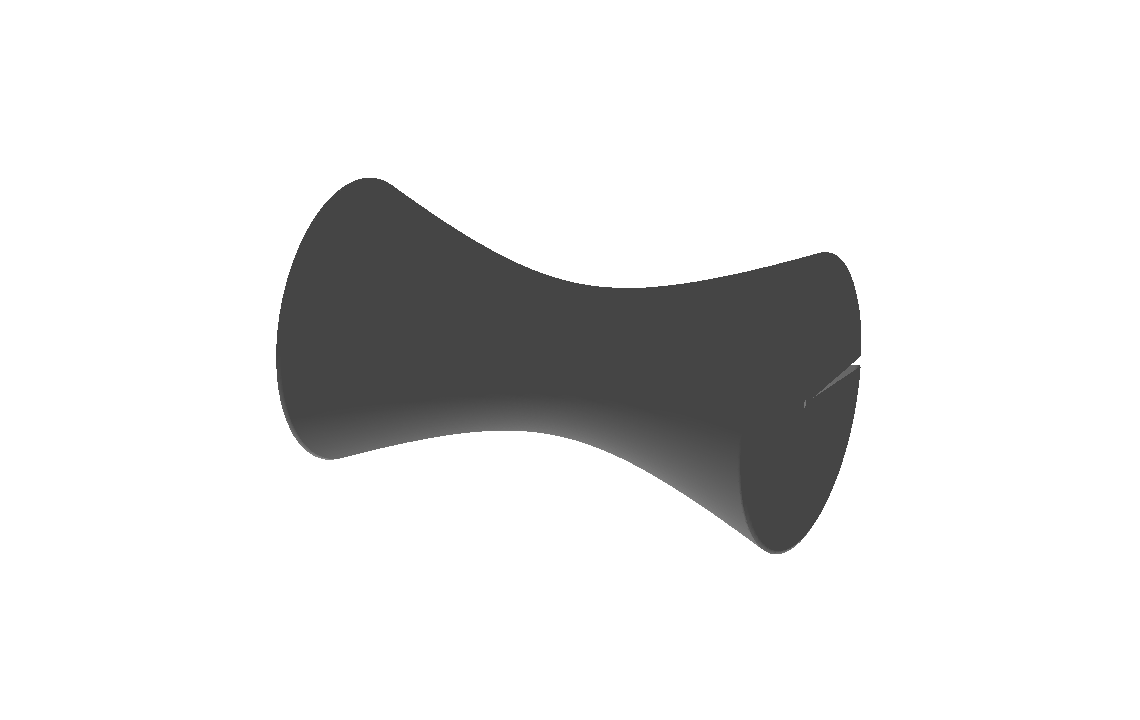
Capped hyperboloid
Sampled meridian with RevolvedBody(x, radii).
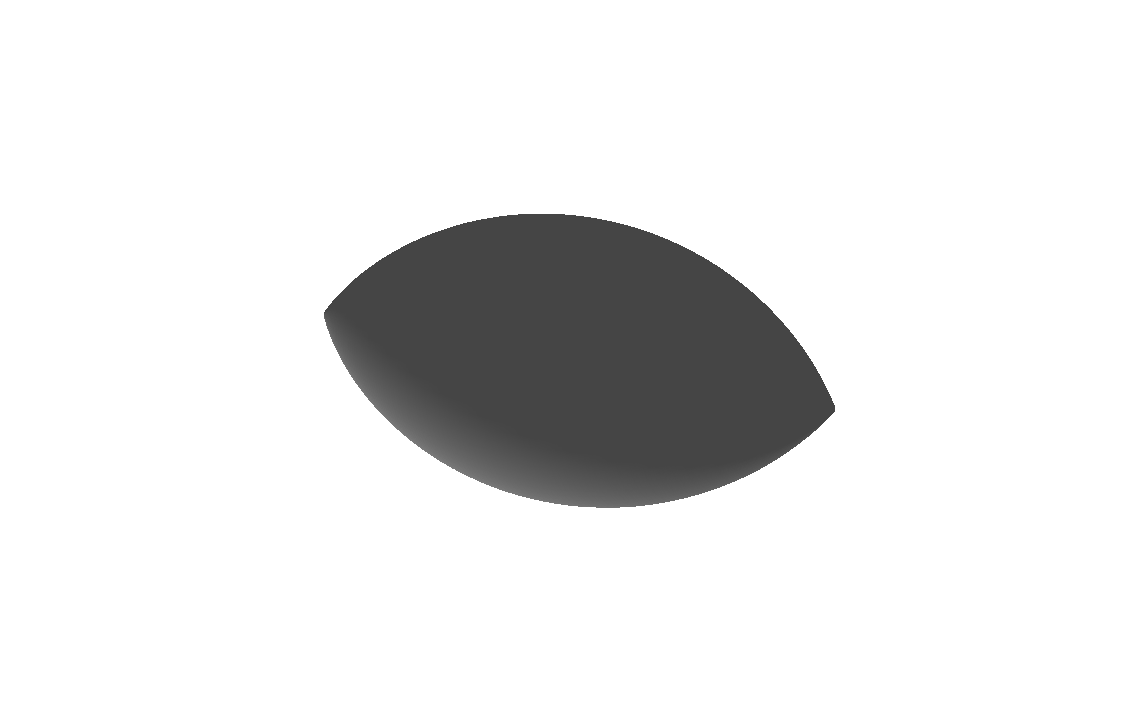
Double circular-arc ogive
RevolvedBody(profile; n=48)
Increasing mesh resolution only subdivides the supplied profile segments. Increase profile sampling separately to converge a curved surface. Corners are preserved. The last gallery revolves meridian panels. Full triangular meshing of densely sampled profiles may require smaller elements or mesh_order=1 near tips and closely spaced corners. Loft section placement likewise controls geometry independently of surface element size. Superellipsoid nodes lie on the prescribed surface, while the triangular interpolants approximate it. Strong curvature and cusps may need finer meshes or linear elements.
Named constructors and solver routes
| Shape | Public constructor | Available routes |
|---|---|---|
| Sphere | Sphere(radius) | Modal, Kirchhoff, FEM, BEM, MFS, Fourier |
| Prolate or oblate spheroid | Spheroid(axial, radial) | Modal, T-matrix, Kirchhoff, FEM, BEM, MFS, Fourier |
| Straight circular cylinder | Cylinder(radius, length) | Modal approximation, Kirchhoff, meridian FEM, BEM, MFS |
| Bent circular cylinder | Cylinder(r, L; radius_curvature=R) | Full BEM/MFS, lateral-surface methods and near-broadside modal approximation |
| Capsule or domed cylinder | Cylinder(r, L; endcap_depth=d) | Full mesh BEM/MFS, straight-cylinder MFS |
| Triaxial ellipsoid | Ellipsoid(a, b, c) | Full mesh BEM, MFS, Kirchhoff |
| Superellipsoid | Superellipsoid(a, b, c; axial_exponent=e1, equatorial_exponent=e2) | Full mesh BEM, MFS, Kirchhoff |
| Circular cone | Cone(radius, length) | Axisymmetric BEM and full mesh methods |
| Circular bicone | Bicone(radius, length; waist=0.5) | Axisymmetric BEM and full mesh methods |
| Circular frustum | Frustum(left_radius, right_radius, length) | Axisymmetric BEM and full mesh methods |
| Elliptical frustum | Frustum((a1,b1), (a2,b2), length) | Full mesh methods |
| Circular frustum chain | FrustumChain(x, radii) | Axisymmetric BEM and full mesh methods |
| Elliptical frustum chain | FrustumChain(x, semiaxes) | Full mesh methods |
| Ring torus, circular tube | Torus(major_radius, minor_radius) | Axisymmetric BEM and full mesh methods |
| Ring torus, elliptical tube | Torus(R, (axial_radius, radial_radius)) | Axisymmetric BEM and full mesh methods |
Here full mesh methods means BEM, MFS and mesh Kirchhoff. The table lists geometry routes, not every material combination. See Choosing a solver for canonical bodies and the material limits below for generated surfaces. Straight-cylinder meridian BEM/FEM use flat ends. Cylinder modal models are approximations to finite bodies, and bent-body lateral models omit endcaps.
Other supported geometry representations
| Family | How to represent it | Practical scope |
|---|---|---|
| Smooth radial bodies of revolution | Irregular(r, order) | Fourier matching, subject to its mapping admissibility checks |
| Sphere or prolate spheroid shell | Shell(body, thickness) | Dedicated structural-shell FEM, with material restrictions |
| Confocal spheroidal shell | Spheroid(a,b) with Shelled(...) | Spheroidal T-matrix, including its supported elastic layers |
| Boxes, prisms, pyramids, polyhedra | mesh(nodes, triangles) or a Gmsh generator | Closed surfaces with resolved edges |
| Elliptic cones, elliptic paraboloids, general quadrics | Gmsh generator or supplied triangular surface | Finite, closed bodies, including required caps |
| General toroids, handled or concave bodies | Supplied closed surface, or RevolvedBody where axisymmetric | Connected, non-self-intersecting boundary |
| Bent, twisted or asymmetric biological shapes | LoftedBody or supplied surface | Loft approximation or externally meshed geometry |
| CAD, scanned or reconstructed objects | mesh("body.msh") or coordinate/connectivity arrays | Must satisfy closed-surface validation |
| Multiple fluid bodies, inclusions and cavities | One mesh per interface, coupled fluid BEM with parents | Disjoint or strictly nested interfaces with supported fluid materials |
| Body near an infinite planar interface | free_surface(body, boundary, k, depth) | Sphere or spheroid coupled to its mirror image for a pressure-release surface or rigid seafloor |
See Geometry and incidence for mesh import, units, labels and coupled-region examples. A single supplied mesh describes one connected boundary. Separate region interfaces must be passed separately.
Solver and material limits
Generated surfaces support Rigid(), PressureRelease() and homogeneous FluidFilled(g,h) or GasFilled(g,h) through BEM and full surface MFS. Here g and h are the interior/exterior density and sound-speed ratios. Coupled fluid BEM additionally handles multiple lossless homogeneous regions.
body = Torus(0.025, 0.006)
solution = bem(body, PressureRelease(), 100.0; n=64, m_max=8)
surface = mesh(body; method=:full, resolution=0.003, qorder=4)
solution_3d = bem(surface, PressureRelease(), 100.0)
Axisymmetric BEM uses meridian panels and azimuthal modes. Full BEM uses the closed triangular boundary. MFS requires source offsets that remain on the correct side of the surface, which is more difficult near corners and narrow concavities. Kirchhoff is a high-frequency approximation whose local-normal illumination does not account for self-shadowing or multiple reflections.
FMM is an acceleration of boundary interactions, not an additional geometry class. There is currently no public FMM BEM path. Supported hierarchical-matrix compression can accelerate existing full BEM formulations without changing their geometry or material scope. See BEM and MFS.
Shapes and physics needing further support
| Requested family | What is still needed |
|---|---|
| Unbounded cones, paraboloids or hyperboloids | A formulation with the appropriate unbounded-domain conditions. Finite capped versions use existing mesh routes |
| Open bowls, screens, plates with zero thickness | Open-surface integral equations and edge treatment. A finite-thickness closed body can use existing mesh routes |
| Horn torus | Regularization or a formulation for its pinched self-contact. Torus requires major_radius > radial_radius |
| Self-intersecting spindle-torus parameterization | Define and trim the physical outer envelope first. A simple closed envelope can use a supplied profile or mesh, but has no dedicated constructor |
| Touching bodies or intersecting interfaces | Geometry repair or Boolean union for one body, or a dedicated contact/interface formulation |
| Arbitrary elastic solids or structural shells | Additional elastic boundary solvers or general volume/structural mesh support. Acoustic surface support alone is insufficient |
| Arbitrary spatially varying interiors | General volume geometry and material-field support beyond the existing FEM geometry families |
| Specialized exact series for another shape | A separate analytic implementation and validation. Numerical mesh support does not provide an exact series |
A named constructor is a convenience, not a prerequisite for solving a valid closed acoustic surface. Conversely, adding a constructor alone cannot supply missing material physics or resolve a singular boundary.